Reduce Stress with Ayurveda: 7 Proven Tips
Ayurveda offers a holistic system for managing stress that goes far deeper than relaxation. Here are 7 evidence-backed Ayurvedic practices to start today.
Why Stress Is a Vata Problem
In Ayurvedic medicine, stress is understood primarily as an aggravation of Vata dosha — the energy of movement, governed by the elements of air and space. When Vata becomes excessive, the nervous system enters a state of hyperactivation: the mind races, sleep becomes fragmented, digestion weakens, and the body tenses.
Modern neuroscience maps closely onto this ancient framework. Chronic stress activates the hypothalamic-pituitary-adrenal (HPA) axis, flooding the body with cortisol and adrenaline. Over time, this dysregulates the autonomic nervous system, shifting it toward a persistent sympathetic ("fight or flight") state and away from the parasympathetic ("rest and digest") state where healing occurs.
Ayurveda's approach to stress is not simply to suppress symptoms but to restore the underlying balance — calming Vata, nourishing the nervous system, and rebuilding the body's resilience (ojas) from the ground up.
1. Abhyanga — The Daily Self-Oil Massage
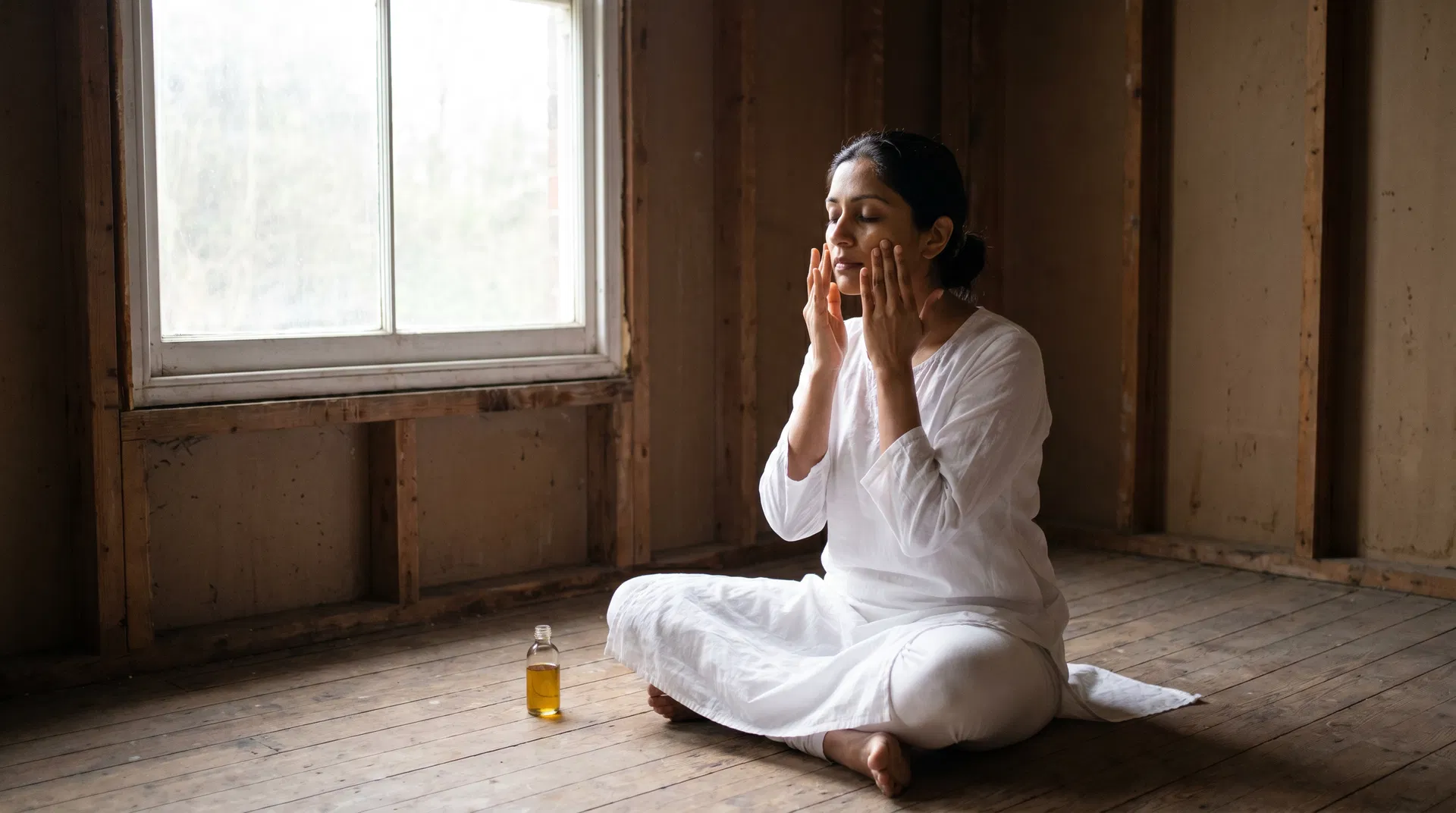
Of all Ayurvedic stress-relief practices, Abhyanga (self-oil massage) is the most immediately accessible and consistently effective. The classical texts state: "From the application of oil, the body becomes strong and smooth-skinned, unaffected by old age, and not troubled by Vata."
How to practise:
- Warm 2–3 tablespoons of sesame oil (for Vata types) or coconut oil (for Pitta types) in a small bowl placed in hot water
- Apply the oil to your entire body using long strokes on the limbs and circular strokes on the joints
- Pay particular attention to the scalp, ears, and soles of the feet — areas rich in nerve endings and marma points
- Leave the oil on for 15–20 minutes, then shower with warm water
Why it works: The warm oil activates the parasympathetic nervous system through skin mechanoreceptors, reduces cortisol, and nourishes the myelin sheaths of peripheral nerves. A 2011 study in the Journal of Alternative and Complementary Medicine found that Abhyanga significantly reduced heart rate and blood pressure compared to a control group receiving a light-touch massage.
2. Shirodhara — The Stress Reset Treatment
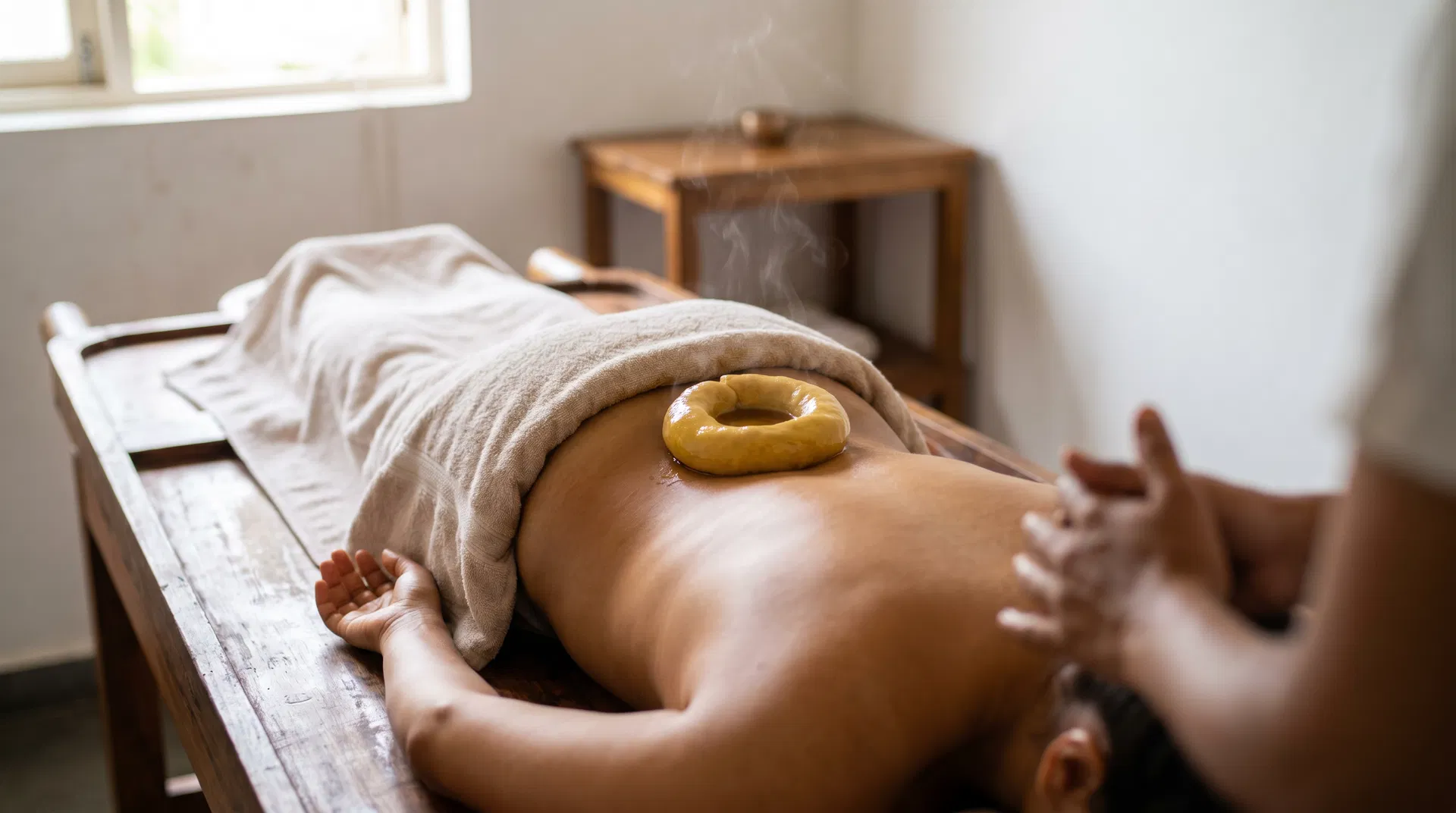
Shirodhara — the continuous pouring of warm medicated oil over the forehead — is Ayurveda's most powerful treatment for stress, anxiety, and insomnia. The word means "head flow" (shiro = head, dhara = flow).
The continuous stream of warm oil stimulates the hypothalamus and pineal gland through the skin of the forehead, triggering a profound parasympathetic response. Most patients enter a deeply relaxed, almost meditative state within minutes — many report it as the most relaxed they have felt in years.
Clinical evidence: A randomised controlled trial published in the Ancient Science of Life found that Shirodhara significantly reduced scores on the Hamilton Anxiety Rating Scale and improved sleep quality in patients with generalised anxiety disorder, with effects persisting for four weeks after treatment.
At Ayur Well, our Shirodhara treatment (60 minutes) uses Ksheerabala tailam — a milk-processed sesame oil with Bala root (Sida cordifolia) — for its exceptional nerve-calming and adaptogenic properties.
3. Ashwagandha — The Adaptogenic Root
Ashwagandha (Withania somnifera) is Ayurveda's premier adaptogen — a herb that helps the body adapt to physical and psychological stress by modulating the HPA axis and reducing cortisol levels.
Evidence: A double-blind, placebo-controlled trial published in Medicine (2019) found that adults taking 240 mg of standardised Ashwagandha extract daily for 60 days experienced a 23% reduction in cortisol, a 44% reduction in perceived stress scores, and significant improvements in sleep quality compared to placebo.
How to use: 300–500 mg of standardised root extract (containing ≥5% withanolides) taken with warm milk before bed. In Ayurvedic practice, it is traditionally prepared as Ashwagandha Lehyam — a herbal jam combining the root with ghee, honey, and warming spices.
Note: Consult your Ayurvedic practitioner before starting any herbal supplement, particularly if you are pregnant, breastfeeding, or taking thyroid medication.
4. Pranayama — Breathing Techniques to Calm the Nervous System
Pranayama (breath regulation) is the most direct intervention available for acute stress. Because breathing is the only autonomic function we can consciously control, it provides a direct gateway to the autonomic nervous system.
Nadi Shodhana (Alternate Nostril Breathing)
This technique balances the left and right hemispheres of the brain and is the most researched pranayama for anxiety reduction.
How to practise:
- Sit comfortably with your spine erect
- Close your right nostril with your right thumb and inhale slowly through the left nostril for a count of 4
- Close both nostrils and hold for a count of 4
- Release the right nostril and exhale slowly for a count of 8
- Inhale through the right nostril for 4, hold for 4, exhale through the left for 8
- This completes one cycle. Practise 10 cycles daily
Evidence: A 2013 meta-analysis in the International Journal of Yoga found that Nadi Shodhana significantly reduced heart rate variability markers of sympathetic dominance and increased parasympathetic tone.
Bhramari (Humming Bee Breath)
The humming vibration stimulates the vagus nerve, triggering an immediate parasympathetic response. Practise 5–10 rounds by inhaling deeply and humming on the exhale with the lips gently closed.
5. Dinacharya — The Stress-Proof Daily Routine
Ayurveda teaches that Vata is aggravated by irregularity — inconsistent meal times, erratic sleep schedules, and unpredictable daily patterns all destabilise the nervous system. The antidote is Dinacharya: a structured daily routine that anchors the body's biological rhythms.
| Time | Practice | Benefit | |---|---|---| | 6:00 AM | Wake before sunrise | Aligns with natural Vata time; prevents grogginess | | 6:15 AM | Tongue scraping + oil pulling | Removes overnight toxins; activates digestion | | 6:30 AM | Abhyanga + warm shower | Calms Vata; grounds the nervous system | | 7:00 AM | Pranayama (10 min) + meditation (10 min) | Sets parasympathetic tone for the day | | 7:30 AM | Warm, cooked breakfast | Nourishes Vata; stabilises blood sugar | | 12:30 PM | Largest meal of the day | Aligned with peak digestive fire (Pitta time) | | 6:00 PM | Light evening walk | Discharges accumulated tension | | 9:00 PM | Wind-down: warm milk with nutmeg | Promotes melatonin; prepares for sleep | | 10:00 PM | Sleep | Before Pitta time (10 PM–2 AM) to maximise restoration |
Even implementing two or three of these anchors — consistent wake time, warm breakfast, and a regular bedtime — produces measurable reductions in perceived stress within two weeks.
6. Sattvic Diet — Eating for a Calm Mind
In Ayurveda, food is classified by its effect on the mind as well as the body. Sattvic foods — those that promote clarity, calmness, and mental stability — are the foundation of a stress-reducing diet.
Emphasise:
- Warm, cooked, easily digestible foods (soups, stews, kitchari)
- Healthy fats: ghee, sesame oil, coconut oil (nourish the nervous system)
- Sweet, sour, and salty tastes in moderation (pacify Vata)
- Warming spices: ginger, cumin, coriander, cardamom, turmeric
- Warm milk with Ashwagandha or nutmeg before bed
Reduce:
- Raw, cold, and dry foods (aggravate Vata)
- Caffeine and alcohol (dysregulate the HPA axis)
- Processed foods and refined sugar (cause blood sugar volatility, worsening anxiety)
- Eating while distracted or rushed (impairs digestion and increases Vata)
7. Meditation and Yoga Nidra
Meditation is the most extensively researched mind-body intervention for stress. A 2014 meta-analysis in JAMA Internal Medicine analysed 47 randomised trials and found that mindfulness meditation programmes produced moderate improvements in anxiety, depression, and pain, with effect sizes comparable to antidepressants.
From an Ayurvedic perspective, meditation directly pacifies Vata by withdrawing the senses (pratyahara) and stilling the fluctuations of the mind (chitta vritti nirodha).
Yoga Nidra ("yogic sleep") is a guided meditation technique that systematically relaxes every part of the body and mind while maintaining a thread of awareness. A single 30-minute session is said to provide the equivalent rest of 4 hours of sleep. Research from the Indian Army found that Yoga Nidra significantly reduced anxiety scores in soldiers with post-traumatic stress.
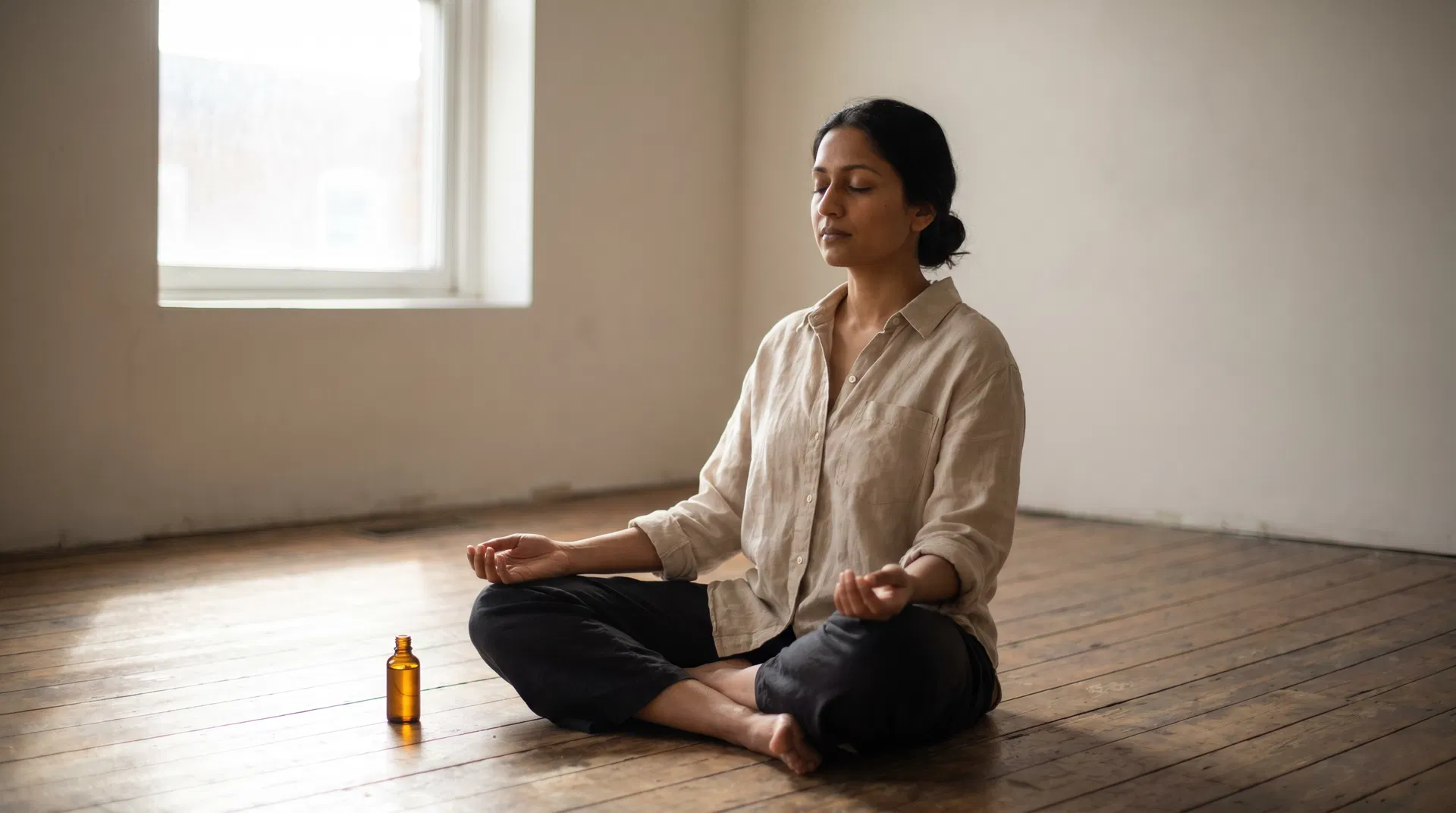
Getting started: Begin with 10 minutes of simple breath awareness meditation daily — sit comfortably, close your eyes, and observe the natural rhythm of your breath without trying to change it. When the mind wanders, gently return attention to the breath. Consistency matters more than duration.
When to Seek Professional Ayurvedic Support
While the practices above are safe and beneficial for most people, chronic or severe stress — particularly when accompanied by insomnia, digestive disorders, hormonal imbalances, or anxiety — benefits greatly from personalised Ayurvedic care.
At Ayur Well, our practitioners offer:
- Ayurvedic wellness consultations — a comprehensive assessment of your constitution, current imbalance, and personalised treatment plan
- Shirodhara — the gold-standard Ayurvedic treatment for stress and anxiety
- Panchakarma programmes — deep detoxification and nervous system reset for burnout and chronic stress
- Herbal formulations — personalised Ayurvedic supplements including Ashwagandha, Brahmi, and Shankhapushpi
Book a wellness consultation online or schedule a free online consultation to discuss your stress levels and receive a personalised Ayurvedic plan.
Tags
Share this article